


The Trump administration has a new catchphrase: “stop quoting laws to men with swords.”
It started with Secretary of State Marco Rubio, who used the line in a Friday speech dismissing the authority of the International Criminal Court. It was picked up the next day by Secretary of Defense1 Pete Hegseth, who seems to enjoy this sort of masculine sloganeering far more than the actual work of running the Pentagon.
Though the line sounds like it was ripped from a Mussolini speech, it in fact originated with a somewhat older Italian: the Roman general Pompey. When the Sicilian city of Messana rebuffed his effort to impose control during a civil war, citing ancient Roman law, Pompey ignored them, offering the now-famous quip about laws and swords as justification.
Pompey would ultimately die by his own maxim.
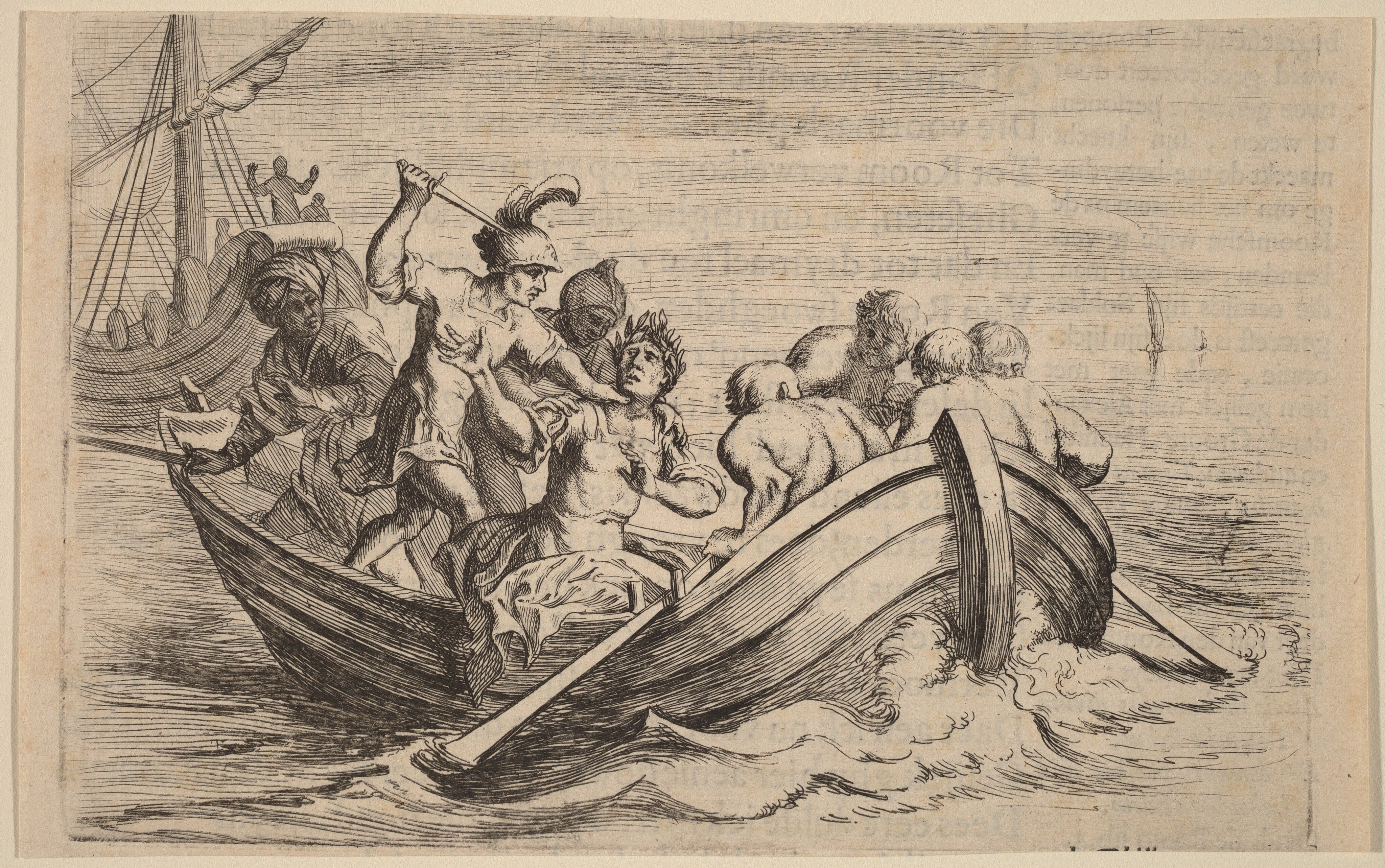
Defeated by Caesar in the Battle of Pharsalus, he fled to Egypt and sought refuge with Ptolemy XIII. Believing the Egyptian king owed him a debt, Pompey expected Ptolemy to welcome him. Instead, Ptolemy’s agents stabbed him to death as he attempted to get off the boat.
This is, I think, not just accidentally embarrassing. It’s an irony2 that speaks to a basic void at the heart of the Trump administration’s worldview: not just on foreign policy, but politics as a whole. It is — more irony here — a failure to understand the real nature of power.
“The realism of fools”
The Rubio-Hegseth line is not some kind of one-off. Back in January, when the Trump administration was threatening to take Greenland from Denmark, now-chief of staff Stephen Miller described the world in basically the same fashion — telling Jake Tapper that global politics is ultimately nothing but a contest of brute strength.
“We live in a world in which you can talk all you want about international niceties and everything else, but we live in a world…that is governed by strength, that is governed by force, that is governed by power,” he said. “These are the iron laws of the world since the beginning of time.”
The Trump administration has lived by Miller’s doctrine. The war in Iran, the boat strikes in the Caribbean, the deportation of migrants to dangerous countries, the annexation threats against Greenland and Canada — all of these attack pretty fundamental principles of international law. And not just law: perhaps more importantly, they attack the basic agreements and expectations that defined America’s relationship with the rest of the world. NATO allies can no longer expect that the US will come to their aid, or even refrain from outright attacks on their sovereignty. Trade partners no longer can expect any stability in US tariff levels. Even countries under attack from America’s enemies can no longer look to Washington for help.
The basic Trump argument here is one of self-interest. Trade agreements, alliance treaties, and international law are all constraints that prevent a superpower from acting in its people’s best interests. The United States can and should simply demand what it wants from others, using its enormous economic and military leverage to force others to give it what it wants. What happens to foreigners is ultimately of no concern; we care about Utah, not Ukraine.
This is ghastly on a moral level, but it’s also a failure on its own terms.
The war in Iran has not made America better off — in fact, it’s done so much damage that Americans revolted against it in the midterms. The Canadian tariffs have delivered neither prosperity nor a 51st state; instead, they’ve driven America’s most important hemispheric ally into Chinese hands. Boat strikes haven’t ended drug overdoses, cruel deportations haven’t produced jobs, and abandoning Ukraine hasn’t delivered cheap energy. Even regime change in Venezuela, the most “successful” of Trump’s brute force initiatives, has yielded few discernible benefits for ordinary American citizens.
Last year, the political theorist Michael Ignatieff described Trump’s international outlook as “the realism of fools.” By that, he means that Trump believes that strength can be measured entirely by hard metrics like the size of a country’s army and economy — that these are the ultimate factors that determine the power of one country over another.
This foolish realism, per Ignatieff, is the reason why Trump has taken Putin’s side in Ukraine even as Kyiv has demonstrated its resilience on the battlefield. Trump believes Russia’s size and might destines it to victory, in spite of all available evidence, because he cannot grasp the “will to resist” that motivates Ukraine to out-innovate and out-strategize the conventionally superior Russian army.
“Who is strong and who is weak…do not depend solely on weapons counts, on rows of tanks, on population size. They depend on will, bloody determination, fierce desire for freedom, and the capacity to draw support because of the moral power of their case. Trump understands none of this,” he writes.
Indeed, the realism of fools infects more than just Trump’s assessment of Ukraine: it has convinced him that American strength can simply compel anyone to bend the knee, when it manifestly has not.
Pompey’s mistake, at home and abroad
In wielding American power like a hammer, Trump has managed to break quite a bit about the world — the international oil market, the international trade regime, America’s relationship with its allies — but delivered few of the ultimate benefits he’s promised.
There’s an almost exact parallel when it comes to domestic policy.
Trump has used executive power against the rest of the US political structure in much the same way he’s wielded military and economic power against the global political order: as a blunt force weapon designed to smash decades, if not centuries, of established rules and precedents. And once again, his administration has produced little lasting change even on its own terms.
DOGE, tasked with making the government more efficient, actually crippled core functions through mass firings without actually reducing the deficit. Trump’s many efforts to rig the midterm elections collapsed under a blue tsunami. Even his immigration policies were enacted almost entirely through executive action and can easily be reversed the second a Democrat retakes the White House.
There’s a basic confusion at work in both places: a sense that because you have the power to do something, you also have the power to ensure that thing ends up the way you want it to. But that’s not how power works: while you can decide what you choose to do, others decide how to react to it. And oftentimes, those others are capable of making sure your efforts don’t work out as planned — especially when you’ve royally pissed them off.
Moreover, the Trump administration forgets that rules and norms can protect just as much as they bind.
The United States benefitted from having allies who implicitly trusted it to respect their sovereignty; by breaking this bargain, asserting the superiority of the sword to the law, America now faces a world far less amenable to its will than the one that existed prior to Trump. Similarly, by wielding state power to attempt to crush the Democratic party as an organization, Trump has invited no-holds-barred political retaliation — perhaps, in the future, using some of the tools of executive power that his own administration has developed.
This weekend, Rubio and Hegseth imagined themselves Pompey in Messana. In actuality, they’re more likely Pompey in Egypt.
I don’t use the Trump administration’s preferred “Secretary of War” because actually changing the name of the Department of Defense would require an act of Congress, which the Trump administration has not been able to secure. It’s worth being a stickler about these things.
One gleefully noted by the Iranian foreign minister on X.